United’s peacock diverts attention from the real issues

A performance artist tried to bring an emotional support peacock on a United flight and was declined.

This comes, oh, so conveniently, as Delta is defending itself against some very real concerns over its new restrictions against emotional support and service animals.

First, we deal with the peacock. No true animal lover or good animal steward would subject a peacock to a trip through an airport and a trip in an airplane. Peacocks are easily stressed out. And they scream, loudly, inappropriately and often. I have no compunction about saying peacocks belong on a farm, not on an airplane. Also, there’s no room on an airplane for a male peacock to display its gorgeous tail feathers. And that’s the only thing about a male peacock that seems remotely therapeutic.

All this leads to my skepticism about a) whether someone really owns a therapy peacock and b) whether this attempt to get a peacock on board was staged by someone favorable to Delta’s new policies.

If so, this diversion comes at a time when many people are trying to get real answers to legitimate questions like, “Where is my service animal allowed to relieve himself when my flight is delayed for ten hours, as frequently happens, especially on Delta?” The complaints surrounding service and emotional therapy animals centers largely around these animals peeing and pooping amongst the passengers. UPDATE: The good people at ESA Doctors have told me that airports are stepping up to the plate and providing designated areas for service animals.

Meanwhile, Delta has still not responded to a request from the Animals Rights Channel about where, exactly, these animals are allowed to go potty. With no answer to this question, we are forced to deduce that there is no approved place for service animals to relieve themselves on Delta. ESA Doctors tells people not to feed or water their service dogs before getting on a flight. These experts also advise that passengers traveling with animals bring “pee pads,” and somehow get their dog to use these before getting on the plane if the flight is delayed or people at the security checkpoint are going on a power trip.

All this adds up to: Of course, your dog or cat is going to pee or defecate in the cabin because there’s nowhere else to do it. Rather than simply providing this simple accommodation, Delta prefers to engage in an enormous and reputation endangering controversy.


Bringing your comfort pet on board is a rich person’s problem

By Lynn Hamilton

In the wake of Delta Airlines’ announcement that it will clamp down on the ever expanding universe of quasi-trained comfort and emotional support animals, I think it’s time for some perspective.

Whether you get the comfort of an animal on your flight is mostly a rich person’s problem. Yeah, I said it.

Statistics show that over seventy percent of people who REALLY NEED a service animal don’t get one. That’s because service animals start at around $15,000 and that’s if you train the animal yourself.

So, not to put too fine a point on it, people who can afford a trained emotional therapy duck have been taking their animal on the plane while blind people living in low-income neighborhoods can’t even get a dog to help them get to Walgreens.

Meanwhile, airlines like Delta don’t want to spend money redesigning their cabins to accommodate therapy animals. Therapy animals, in other words, are cutting into Delta’s profits.

Maybe that’s okay, if Delta would throw a little of its profits at helping people who really need them get service animals. Please sign today’s petition asking for that.

Where do service animals pee on a Delta flight?

Delta Airlines have said they will cut back on the rights of passengers to bring comfort animals aboard. The new, proposed rules say that, in effect, only dogs and cats may be brought on board, and passengers will have to give notice 48 hours in advance, if they wish to bring a comfort animal on a flight.

Delta representatives are saying that comfort animals wander the cabin and urinate or defecate in inappropriate spaces in the cabin. Once, a comfort animal bit a fellow passenger.

Animal Rights Channel supports the rights of dogs to serve as therapy and service animals because dogs often seek out and enjoy work, just as humans do. We believe that helping others less fortunate gives meaning to life for both humans and animals. Similarly, we believe that most cats have a strong drive to snuggle with humans, a situation that provides mutual comfort and emotional support to both human and cat. Therefore, many cats are predisposed to be excellent comfort animals as well, and they are unlikely to regard this as work.

It is, however, questionable whether ducks, snakes, and other smaller brained animals should be subjected to air travel. The stress of such travel could be damaging to the animal, and small comfort to the human.

In complaining about service animals, Delta representatives have said nothing about whether they supply a place for service animals to urinate and defecate. Flights are often delayed, as we all know, and even well-trained animals can only hold on to their body waste for so long. AnimalRightsChannel.com has put in a request for information from Delta’s communications department to answer this question.


Norway thinks we’re the shithole

waters-3022419_960_720.jpgLet’s take a look at whether Norwegians would actually like to immigrate to the United States. By all usual measures, especially education, healthcare, and the prison system, it appears Norwegians have a higher standard of living than we do.
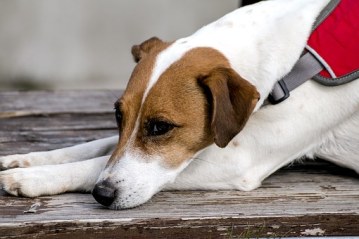
A little research into Norway’s animal welfare code shows that Norwegians are way ahead of us in animal rights. Norwegians are compelled by law to report or aid an animal in distress. Here’s a quote from the code: “Anybody who discovers an animal which is obviously sick, injured, or helpless, shall as far as possible help the animal. If it is impossible to provide adequate help, and the animal is domestic or a large wild mammal, the owner, or the police shall be alerted immediately.”

When I met my dog, Alice, she was dying of combined malnutrition and exhaustion in my back yard, and my neighbor, Kenny, was stabbing her with a broom stick.

“Kenny, what are you doing?” my husband asked.

“This dog has mange,” Kenny said, while he continued to assault her.

“But she’s on our side of the fence,” my husband said.

Finally, we got Kenny to desist. But then we had to do something. U.S. law apparently says we can allow her to turn into compost. But that kind of chafes at our personal standards. We called animal control and were told that they won’t collect a suffering animal “unless it bites someone.”

Long story short: Somewhere on the way to the vet’s office, my husband fell in love with this dog that had half her fur. She’s long recovered and snuggling on our bed, as I write this. We named her Alice.

But when I look at the infrastructure for animal welfare in my country, I’m forced to ask, under my breath, “Am I living in a shithole country?” And why would any Norwegian want to come here?


Dogs can do a lot more than roll in the grass, so don’t use pesticides

We all know that dogs can do things humans can’t. Like track down murderers from a single whiff of their shirt. And, if you watch cop shows, you probably know that dogs can detect drug shipments and guns.

If you rely on one or more dogs to keep your home safe while you’re away, you’re smart. Dogs are still the best security system. Most burglars are simply looking for an easy target, and that big barking dog with her paws on the door just made your house not worth it.

You might know that dogs can be trained to predict seizures in epileptic children and adults, saving lives. But did you know that dogs can be trained to detect bedbugs?

Sadly enough, dogs can predict when an industrial environment is toxic to humans. When dogs start getting lymphoma, there’s a chance to save the humans in the same neighborhood. You see, dogs will develop cancer in response to toxins much more quickly than we will.

Dogs truly are man’s best friend in many ways. But if you have a dog, you have a responsibility to maintain an organic lawn. The chemicals in lawn pesticides have been linked to cancer in dogs and possibly humans.

Today’s action calls for dog owners to go organic on their own property and talk with your dog-owning neighbors about the dangers of lawn chemicals.

Dogs facts and information – Dogs can do a lot more than roll in the grass, so don’t use pesticides

We all know that dogs can do things humans can’t. Like track down murderers from a single whiff of their shirt. And, if you watch cop shows, you probably know that dogs can detect drug shipments and guns.

If you rely on one or more dogs to keep your home safe while you’re away, you’re smart. Dogs are still the best security system. Most burglars are simply looking for an easy target, and that big barking dog with her paws on the door just made your house not worth it.

You might know that dogs can be trained to predict seizures in epileptic children and adults, saving lives. But did you know that dogs can be trained to detect bedbugs?

Sadly enough, dogs can predict when an industrial environment is toxic to humans. When dogs start getting lymphoma, there’s a chance to save the humans in the same neighborhood. You see, dogs will develop cancer in response to toxins much more quickly than we will.

Dogs truly are man’s best friend in many ways. But if you have a dog, you have a responsibility to maintain an organic lawn. The chemicals in lawn pesticides have been linked to cancer in dogs and possibly humans.

Today’s action calls for dog owners to go organic on their own property and talk with your dog-owning neighbors about the dangers of lawn chemicals.

How different are dogs and foxes?

By Judith Sansregret

We know that all dogs, even chatty little lap sitters like the Pekingese, are descended from wolves. And all dogs, from the dignified mastiff to the Pomeranian, share such similar genetics, you couldn’t tell them apart from their DNA strings.

But the fox looks like a dog! Except for malamutes and huskies, most dogs look more like foxes than they look like wolves.

So I decided to do a little research. I soon discovered a Russian experiment on domestication of silver foxes that began in the 1950s and is still running.animal-1248899__340

No right-thinking animal rights advocate could possibly support this experiment. The experiment is currently funded by the sale of tame foxes and fox fur. However, the results suggest something interesting: foxes could just as easily have become man’s best friend.

At the beginning, foxes in this experiment were bred for not biting the researchers and not fleeing the researchers. Eventually, they were bred for allowing themselves to be petted and fed by hand. As they were bred for tameness, their physiques changed. They got floppier ears, curlier tails, and some of them sported spots on their fur.

Though they were not bred for cuteness, they acquired dog-like cuteness as they got tamer.

Within just ten generations, twenty percent of the foxes in the experiment acted just like dogs. They wagged their tales, approached people they didn’t know without fear, and interacted joyfully with humans, preferring their company to that of other foxes. A recent article on this experiment shows a fox sleeping on the lap of a human.

It appears that foxes could have become dogs about as easily as wolves did. So it may be just a quirk of history that dogs were bred from wolves.

So there is your answer: any fox might be only ten generations away from being a dog.

Britain admits animals feel pain

Great Britain’s Michael Gove has admitted that animals can feel pain and “enshrined” that into law, according to all major UK news vehicles.

Gove, the UK’s environment secretary, has been widely photographed with a white fluffy dog in his arms.

This happened because animal rights advocates got a whiff that British Parliament was getting ready to jettison a European Union law that recognizes animal sentience.

Admittedly, the European Union law is foundational for preventing animal cruelty, but it does almost nothing to protect wild animals from loss of habitat.

Nevertheless, animal rights champions should support the new bill while continuing to ask for more stringent protections of animals.

What you can do

Read the bill here:  https://www.gov.uk/government/uploads/system/uploads/attachment_data/file/666576/draft-animal-welfare-bill-171212.pdf

Write to the team who are taking public comment on this issue. Here is the snail mail address:

Animal Welfare Team, Area 5B, Nobel House, 17 Smith Square, London, SW1P 3JR

If you live in the UK, please take this survey to support the Animal Welfare Bill:  2018:https://consult.defra.gov.uk/animal-health-and-welfare/consultation-on-the-animal-welfare-bill/