Is Kentucky really worst in animal protections?

When I walk the streets of east Louisville, Kentucky, I see a town that loves its dogs. Dogs and their humans are everywhere: in the Morton Avenue Dog Park, in the dog friendly wine shops, at street festivals, at the patios of bars and restaurants.

On Nextdoor.com, my neighbors religiously track and return lost dogs and cats, sometimes before the owners even post the loss. My neighbors may or may not like me, but this is know: If I lost one of my dogs, they would form a dragnet to find her.

If my dogs were the only consideration, I would choose Louisville over a lot of cities, especially Denver and Miami where anti-pitbull laws are still in place.


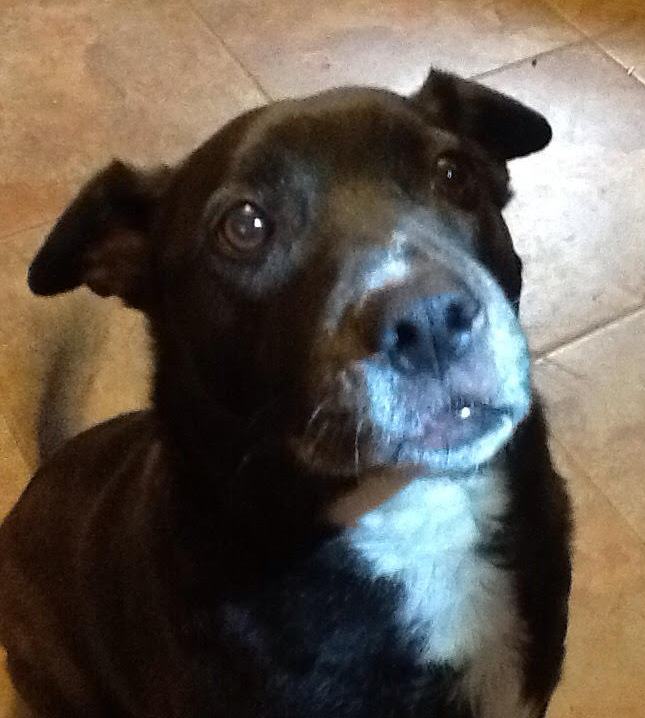
good shot of alice

Is she or is she not a pitbull? If I lived in Denver, inexpert dog catchers would decide.

So it was something of a shock to learn that Kentucky has been rated dead last in protecting its critters by the Animal Legal Defense Fund (ALDF).

Rankings are based on laws, not actions

It’s important to note that this poor ranking is not based on the way Kentucky families and farmers actually treat their animals. Kentucky’s poor showing is because of its laws.

When it comes to animals, Kentucky has committed some sins of omission. Sure, we have laws on the books that protect an animal from cruelty and fighting.

But we have no laws that protect animals from abandonment, neglect, and sexual assault.

Should we worry about our laws when, all around us, dogs and cats appear to be cherished?

Yes, we should. Because, at the end of the day, there’s no way to measure the total love for pets or the sum of care for livestock in any state. We are stuck with laws as a metric.

Our vets are gagged

Perhaps even more troubling is a law on Kentucky’s books that prevents veterinarians from reporting cruelty to animals when they see it.

People who are abusing dogs, cats, and bunnies are unlikely to seek veterinary care. The obvious victims of this law are Kentucky’s horses.

Does this gag law exist to protect someone who hurts his own racehorse for the insurance pay off?

We need to get off this list

Even if your heart doesn’t melt every time you see a puppy on Youtube.com, you should care about this issue. A state whose reputation is largely based on horses cannot afford to be the worst state on the AlDF’s list. Kentuckians need to reach across the isle and forge laws that better protect our non-human friends and family members.

Pet rescues drove me to shop for my dog

I’m sixty. But I have a baby. A twelve-week-old Siberian husky named Finn. He’s the last baby I’ll ever have.

“When we’re seventy, we’re going to adopt old dogs,” I told my husband. “The ones that people dump at the pound because they’re too old.”

My vet wants to know where I got Finn. This story always starts with the words, “Don’t judge me.”

That’s because I bought a dog from a family in my neighborhood who bred their pet husky.

Yes, I failed to adopt from a rescue.

Not for lack of trying. I filled out no fewer than five rescue organization applications. And this is what I found: Most rescue organizations are rather poorly run. What follows is the reader’s digest condensed version of my experience.

Pawsibilities–not recommended

I saw a dog on Petfinder.com that looked cute and ticked every box I was looking for: puppy, good with other dogs, good with cats, good temperament. The $850 price tag gave me some sticker shock, but, for a temperament-tested dog, it seemed worth it.

What was never disclosed to me in the application process was that this four-pound dog  would never get any bigger.

On Petfinder, the Pawsibilities pup was represented as an Australian shepherd/poodle mix. Based on this information, I expected a dog in the 25-40 pound range.

Nowhere on Petfinder did it say he was a miniature mini. And this was also not mentioned when I visited with the dog. It was finally revealed at the vet’s office.

Animal Care Society–not recommended

Animal Care Society is nationwide. They have an impossibly long application, and they respond to applications when they damn well please. They accepted twenty-five applications for the puppy I wanted.

Animal Care Society wants your veterinary records from the past ten years. They also want three character references IN ADDITION to your veterinarian’s reference. Animal Care Society’s buzzword is “Thank you for adopting, not shopping.”

But they are driving people to shop.

When I questioned these practices, they threw out my application.

Woodstock Animal Rescue–tentatively recommended

I almost adopted a puppy from Woodstock Animal Rescue. They were fostering a super-cute pointer puppy. But my eight year old dog introduced herself too aggressively. Then a so-called behaviorist on site said it would never work.

Southern Indiana Rescue–not recommended

Southern Indiana Rescue posted a picture and description of a white pit bull named Ace on Petfinder. He was described as good with dogs and good with cats.

Responding to my application, the rescue volunteer emailed that Ace had not been “cat tested” but that they were going to do that.

Then they lost my application.

Several weeks of radio silence later, I made a phone call. SI rescue then said that Ace was not good with other dogs or people.

I expressed interest in another dog fostered by that rescue. When I arrived at PetSmart, my dog barked at the other dogs in the store. Because of that, the SI rescue director told me that I needed to make her an only dog.

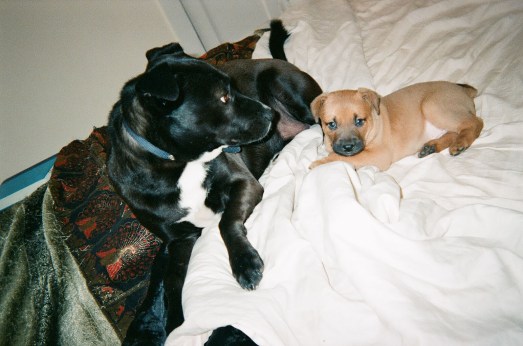
But I knew my dog was good with other dogs! I was a puppy foster myself! Here’s a picture of the puppy I fostered in Statesboro, Georgia:

relatestodogs

And to the left is my lab mix who helped me raise this puppy

This was the moment when I gave myself permission to buy a puppy from someone’s back yard.

What you can do: 

If you are adopting a dog, adopt from the ASPCA or your municipal pound or animal shelter. They are arguably more efficient and less subjective than start-up rescues.

Do not trust Petfinder.com about the age or size of the pet or its ability to get along with other animals.

If you run a rescue

Keep Petfinder.com pet profiles accurate and up-to-date. If you don’t know how a dog is with cats, do NOT check that the dog is cat friendly. If a dog is more than four months old, do NOT claim it is a puppy.

If you have already received ten or more applications for a pet, remove the Petfinder profile until you get up to date on responding to applications.

If you run a rescue and you receive twenty-five applications for a single dog, review every application and respond to every application. Don’t just throw the dog or cat at the first applicant in the pile, who has a fence and a veterinarian. This practice is not fair to all the applicants who took forty minutes to an hour to fill our your application. 

If you run a rescue, and you don’t have time to respond to applications or you tend to lose applications, dissolve your rescue and, instead, volunteer at a rescue organization that has its shit together.

Do NOT start a new rescue unless you have approximately thirty hours a week to devote to it, and you have a good record keeping system. Do NOT start a new rescue on the assumption that you are the only good dog owner in the world.


Facts about animal abuse and what you can do

When it comes to facts about animals abuse, dogs and cats  get the most attention. According to the ASPCA, shelters euthanize 670,000 dogs every year in the United States. And 860,000 cats meet the same fate.

These facts about animal abuse do not include the number of animals that are beaten to death or starved by their owners or dumped on the highway to die before they can be saved by a rescue group or picked up by animal control.

The good news is that this statistic is going down. Due to the proliferation of rescue groups who pull animals out of pounds and high-kill shelters, the United States is euthanizing fewer dogs than ten years ago.

What you can do: Don’t breed your animals. Spay and neuter your pets. Adopt a dog directly from a high-kill shelter. Volunteer at a no-kill rescue. Start up your own no-kill rescue.

Facts about animals abuse: Corporate chickens

If you pick up a brand-name chicken at the grocery store, chances are it was factory farmed. It might be beautifully packaged and cheap. The chickens, themselves, are paying the balance on that cheap meal.

Factory farming involves placing chickens in cages where they are virtually immobile. They can’t move naturally, as they would do in the wild, and that makes them get fat faster.

Chickens in these conditions sometimes peck each other to death out of frustration and madness. To prevent that, some farm owners chop off their beaks. Factory farmers also dose chickens with growth hormones.

What you can do: Pay the extra bucks for organic eggs and chickens. Look for the terms “organic” or “free-range” on the packaging and buy that instead of Tyson. Better yet, buy your chicken and eggs at the farmer’s market. Get involved with community supported agriculture programs in your community. This involves supporting small local farms by pledging to buy a certain amount of food from them every month. In many cases, the farms will deliver a box of veggies to your door. If your local codes permit it, you can raise your own chickens.

Facts about animals abuse: Extinction

Many animal species are dying out altogether. Sea turtles like the loggerhead, leatherback, and the Kemp’s Ridley are dying out because people and businesses near the ocean don’t turn their lights off at night.

Polar bears, penguins, and snow hares are in danger of extinction due to climate change, especially warmer temperatures in the arctic.

Monarch butterflies are in danger because too many people think that milkweed is a weed and they pull it up and trash it instead of cherishing it. Milkweed is the monarch caterpillar’s only food. Without it, there will be no more monarchs.

Worldwide, trophy hunters, endangered species traders, and ivory merchants are decimating gorillas, elephants, tigers, and rhinos.

This is by no means a comprehensive list of the dangers to animals.

Facts about animal abuse: The myth of human superiority

Anyone who has owned a cat or dog knows that animals feel pain. Animals also feel joy, affection, loyalty, protectiveness, outrage, and loneliness.

To assume that people are more important than animals is egotistical. There’s no science for that assumption. When we “test” animals to see if they are as smart as we are, we skew the results by testing for what we are good at.

In many arenas, animals are superior to humans. Here are just a few examples:

  1. Chameleons can change color. Humans can’t.
  2. Dogs can smell illegal cargo (guns, invasive species, endangered species, bombs). If people could do this, we wouldn’t need cargo sniffing dogs.
  3. Monkeys can grasp a rail and hang from their feet.
  4. Cats not only find their way home if they have been stolen or lost, they can also find their owners at a new and unfamiliar address. This is called psi trailing.


Ace your rescue dog application: 15 tips

You want to rescue a dog that’s had a hard life. Maybe his first owners kept him lonely and chained up. Maybe he didn’t get good veterinary care. You are a generous person who wants to do the right thing. 

Then you take 45 minutes to fill out a dog rescue application and find you were declined because you don’t have specific “breed experience.” Or some other reason that feels wrong. Understanding the concerns behind pet rescue questionnaires can really help you navigate the process. 

Tip one: Understand rescue sites. 

A lot of people end up at Petfinder.com because of its search rankings. However, it is not the only, or even the best, platform to find a dog. Rescueme.org is a great, nationwide site. Also research specific breed rescues, like Husky Haven of Florida which specializes in the husky breed. There is a rescue for almost every breed of dog or cat you are interested in. 

Be aware that most of the dogs on these sites are already owned by rescues. And you will have to navigate their unique processes. Some dog owners get frustrated and put their own dogs on a rescue site, directly, instead of finding a rescue organization to take them. These ads read like, “I’m having a baby, and it kills me, but I have to give up my fur princess.” Or “I’m moving and can’t take my dog.” These listings may offer you an opportunity to adopt a dog without having to deal with a rescue. 

Tip two: Keep filling out applications

If you don’t receive a reply to your query or application within 48 hours, there’s a good chance the rescue has lost your application or they adopted out the dog while you were filling out your application. It’s likely they will not circle back around to the other people who applied and let them know that the dog now has a home. You should not waste time trying to figure out what happened. 

You do have the right to ask an adoption agency how many applications they already have for a specific dog. If they won’t tell you, there’s a good chance you are dealing with shady people. There are good rescues and bad rescues. Unfortunately, it can be very difficult to separate them out when all you have is a name and website. 

Tip three: You must have a fenced yard for a big dog.

The rescue dog application may give you the impression that a fenced yard would be a nice thing to have.

Wrong. It is an absolute requirement.

The rescue dog application may ask how tall your fence is. If you are looking at any dog bigger than a mini, you need a fence of at least six feet in height. It’s a good idea to have your fence built before starting the rescue process. 

Tip four: You must have your other animal(s) up to date on shots.

While evaluating your rescue dog application, the rescue agency will call your vet and ask how many pets you have and whether they are up to date on all vaccines. If they are not, you will not get the pet.

It doesn’t matter if your indoor-only, twenty year old cat has not gone outside for eighteen years. If you want to adopt a rescue dog, you will have to take your cat to the vet and get her shots.

Tip five: Pets are not disposable.

If you have ever dumped an animal, you are not eligible for another pet. Dumping can be defined as: leaving your dog or cat behind when you move or opening the car door and letting your pet run off into the wilderness.

If you have taken an animal to the pound or given it away to another person, you should carefully think through your reasons for getting another pet. 

Think about what you would do to protect a child. If you won’t do almost as much to protect your pet, don’t get a pet.

  1. This means, for instance, if you have to evacuate for a storm, take ALL YOUR PETS.
  2. If you are moving from New York to California, TAKE YOUR PETS. Don’t give me this, “He’ll be happier with ….” bullshit. No he won’t. Just figure it out, people.
  3. If your fiance says, “me or the dog,” choose the dog. Talk about a bad trade.
  4. When you have a baby, keep the dog. If the dog ends up liking your four year old more than he likes you, keep the dog.

Tip six: The retractable leash question.

The correct answer is “No, I don’t believe in retractable leashes. I do not own and will never use a retractable leash.”

Yes, your rescue dog application will contain some items that are trick questions, designed to trap the unwary.

Truth: If you get a forty pound dog or a bigger one, you will quickly learn not to use a retractable leash. Especially after your dog has circled your legs three times with the leash and left you unable to walk.

I see people using retractable leashes and not breaking a hip. It’s always a tiny dog. It’s still a dumb idea, but not as dumb as walking a malamute on a retractable leash.

Tip seven: The crate question

The correct answer is: “Yes, I am familiar with crate training, and I will crate my dog for short periods of time in conjunction with house training. I will place treats and toys in the crate to make sure it is a positive experience for my dog, and I will never use a crate as a punishment.”

Truth: No matter how nice you make a crate, it’s a crate. Any dog who is crated every day comes to hate his crate. You really do need a fenced yard where your dog can go potty when you’re not up for walking him. 

If the rescue dog application specifically asks you how many hours a day you plan to crate your dog, waffle madly. “In general, not for long. I would appreciate your guidance on this matter,” might be the only safe answer. There is a wide range of opinion on how long you should crate a dog. 

Tip eight: The “How will you discipline your dog?” question.

The correct answer is: “I subscribe to positive dog training methodology. Dogs should be rewarded for good behaviors, but never hit or yelled at.” 

It might be a good idea to line up a dog trainer in advance, so that you can put her name on your application along with contact information. If you have a nice, long conversation with this trainer, you can even put her down as a reference. 

Note: If you plan to beat up your dog, don’t get a dog.

Unlike a child, your dog will not understand why you are punching or kicking. Don’t get a dog as a punching bag. And, if you need a punching bag, don’t have children either.

Tip eight: The “Do you plan to move any time within the next six months?” question

The correct answer is no. Just no, not maybe or “I don’t know.”

Truth: You can safely move with a dog or cat, so long as you use some common sense and advance planning. My dog has changed houses with me four times in the past eight years. She doesn’t like it, but she didn’t get lost or have a psychotic episode.

I would also note that dogs are often more resilient than people, and they don’t hold grudges like people. “I can’t believe you moved me to a place that doesn’t have a Forever 21!” is something you will never hear from your dog.

Tip nine: the “who is this animal for?” question

The correct answer is “me.”

If you are getting an animal primarily because you know that your husband will be devastated when your current dog dies, the correct answer is still “me.”

Your rescue dog application will be declined if you disclose that you are getting this animal as a gift or for your children or for your grandmother or for your other dog or cat who is lonely during the day while you are at work.

Tip ten: the “Where will this dog be during the day when you are not home?,” “How many hours a day will this dog be alone?” and “Where will this dog sleep?” questions.

The correct answers: Your dog will be in your house during the day when you are not home, and not in a crate and not in your back yard or front yard.

When calculating how long the dog will be alone, consider the other members of your family. Could your husband work at home? If so, add those hours to the hours your dog will have companionship. Similarly, if your daughter comes home for lunch, calculate that time.

If you live alone, you should really try to adopt two dogs, preferably litter mates. Sibling dogs love each other for ever, and they take the pressure off you to provide all the companionship your puppy needs.  

Your dog will sleep in a dog bed. If you are applying for a puppy, your puppy will sleep in a dog bed which has been placed inside your bedroom.

Truth: If you actually get a puppy, he may cry all night long, allowing no one to sleep, unless you put him on your bed or in a crate with another dog.

Tip eleven: “How much does it cost to own and care for a dog?”

The correct answer is: “Between $1000 and $5000 a year, depending on the size of the dog, its age, and health issues. However, I have also set up an emergency fund of $2000 to cover teeth cleaning, emergency care, and treatment for any chronic health issues that might come up.”

Truth: If you don’t have are struggling financially, it is not a good time to get a dog. If, however, you are financially stable, if you own your home, if you have savings and a paid off car, it is a good idea to mention those things, whether the application asks for them or not. Rescues do, legitimately, want assurance that their dog is going to a secure home where financial problems will not endanger her veterinary care or stability. 

Tip twelve: “In the past ten years, have you owned any pets that are not on your list of current pets? What happened to them?”

The correct answer is “Princess died in the vet’s office after a heroic struggle with cancer.” It is okay to have euthanized your animal, if he or she had a fatal illness.

If you reveal, on your rescue dog application, that you ever lost a pet, you will not get another animal from a rescue. Even breeders have a problem with lost pets.

Truth: If you plan to lose your dog or let your dog run wild in the neighborhood, don’t get a dog.  The good people on Nextdoor.com will crucify you if they have to go looking for your dog more than once.

Similarly, if you disclose that any animal of yours was killed in traffic, you will probably be disqualified by the rescue organization.

Tip thirteen: “How old are you?”

The correct answer is: Under sixty and over twenty.

Age discrimination continues unchecked at rescue organizations. Their reasoning is that your adopted dog may live to be twelve and your adopted cat may live to be twenty. It is true that, as we age, we need to have plans in place for our pets, should they outlive us. However, many rescues don’t actually “sell” you a dog. They adopt it out to you in return for a donation. If that item is in your adoption paperwork, your orders are clear. If you have a terminal illness, you take your animal back to the rescue organization. 

Truth: If you are getting a puppy or a high-energy dog, this dog will need a LOT of attention and exercise. Retirees can be great adopters if they have the energy to walk a dog every day and get him to the dog park for six or more hours a week. You can also put agility equipment in your back yard and teach him to run up and down the ramp, through the tunnel, etc. The issue is: Are you still fit and energetic enough for a fit and energetic dog? If the answer is “no,” you will want to adopt an older dog, at least six years old, with a resume of couch surfing. 

Older dogs and cats need homes, and rescues can do a good job of matching your needs if you say you want a low-energy dog.  

Tip fourteen: “Under what circumstances would you surrender this animal?”

The correct answer is something like, “Only death will part us” or, “If I am diagnosed with a terminal illness.” 

The main thing is not to say that you would dump your dog at a shelter if he pees the rug or if you get married or have a baby or get a new job or move to California.

See tip five, and don’t make me get on my soapbox, again.

Tip fifteen: “What will you do when the puppy pees the house?”

Correct answer: I will clean up the pee without scolding the puppy. I understand that house training a puppy involves praising the puppy for peeing outside, and making sure the puppy has adequate opportunities to go outside. I will be patient and understanding. And pee does not freak me out.

Okay, the puppy IS GOING to pee the house. A LOT. Puppies and inappropriate peeing go hand in hand. You don’t get the cuteness without the responsibility. Honestly, many of those You tubes about cute puppies need to be replaced with films of puppies peeing the house. Over and over and over again. There’s a good chance it will take six months or more before your puppy does not pee the house at least three times a week. If you are not prepared for this, do not get a puppy.

Similarly, if cleaning up urine is absolutely the worst thing you can think of, do not get a puppy. or a dog. Or a cat. And please don’t have children. They pee too.

In conclusion, there are good rescues and bad rescues. The good ones respond to questions, read applications, make phone calls, and start a dialog with applicants. Unfortunately, you cannot always identify the bad rescues right away. If they don’t get back to you after you have asked a question, that’s a sign of an irresponsible rescue. Also look at their application. If it’s more than two pages, and you can’t fill it out on line, they don’t respect your time. If they ask for an unreasonable number of references, in addition to your veterinarian and dog trainer, they don’t respect your time or your relationship with your peers.

Donations gratefully accepted

Hey! We love animals! We will keep working to protect dogs, cats, and wildlife with or without donations, but if you are able to help, please do!
$2.00

Seven cool things about your dog’s nose

From Alexandra Horowitz’s “Being a Dog”

A breath is not a sniff. When someone sniffs, he is deliberately pulling in air at a rate much faster than breathing.

The length of a dog’s sniff has been measured by stuffing science gear into the dog’s nose. With this as a study limitation, a pointer holds the record for longest, most impressive sniff. He pulled in air for forty seconds while on a dead run after his prey.

To put that into context, I just inhaled vigorously while walking from the living room to the kitchen. Couldn’t crack three seconds.

She measures the intensity of your scent

If your dog is anything like mine, he is waiting for his person

good shot of alice

I am not this dog’s favorite person.

(you?) at the door when that person comes home from work. Maybe your dog recognizes the distinct cough of your car’s carburetor or maybe not. It could be that he is measuring the loss of your smell in your shared space as the day goes by. When it reaches a certain point of dilution, he knows you are coming home. If my husband does not come home by the time his scent has evaporated from his bedroom, our dog moves into my office and snuggles with her favorite cat for consolation. Then she doesn’t get up until she hears him at the door. (I am not my dog’s person. Pretty sure I come after the cat.)

Canines have talent

Dogs can be trained to sniff out, not only the scent of criminals, drugs, and guns but also bedbugs, land mines, explosives, missing people, dead people, termites, and cell phones (yes, this is useful in prisons where inmates are not supposed to have them).

Dogs have been deployed to crack down on the illegal import of endangered species. They can detect a shark fin hidden in luggage. Also, tigers and turtles, black bears, and basically any animal which gives off a smell, which is one hundred percent of animals. T

hey can help you count the dead birds at a wind farm by finding every downed bird. They can also stop a dangerous invasion of non-native parasites at the airport or the freight dock. That’s right, folks. Dogs can be trained to sniff out invasive knapweed, fire ants, and tree-destroying red palm weevils.

They can smell and breathe at the same time

The slits at the side of your dog’s nose are not an arbitrary evolutionary design. They exist to allow the dog to keep breathing while holding the bouquet of an interesting smell in the main chamber.

By his urine you will know him

Your dog really is posting emails when she smells the neighborhood peeing oak and raises her leg to post a reply. Dogs are sharing information about their health, happiness, confidence level, etc.

Basically, they are telling on you and whether you are a good dog owner.

Self awareness does not require a mirror

Dogs achieve self awareness through smell, not sight. Stay with me here because this can’t be explained in a sound bite.

The traditional test for self awareness in animals is whether they recognize changes to themselves in a mirror. First you have to put a mirror in the animal’s space and let her pass it a few times.

Then you put a sticker or a mark on the animal’s face. If the animal pauses and checks out the alteration, that’s self awareness.

Elephants and dolphins are troubled by changes to their lovely demeanor, but dogs don’t give a shit how many stickers you put on their faces, they walk right by the mirror unfazed.

So it might seem that dogs are not self aware. However, in a test that measured whether a dog could differentiate the scent of its own pee from that of other dogs when isolated in vials, the dogs unerringly identified their own pee.

Then, they peed on the urine samples of other dogs and never their own. That’s self awareness.

Your own sense of smell is not gone; it’s just hiding

People can smell a small fraction of what dogs can smell. A really tiny fraction. But we haven’t lost our sense of smell, we’ve just devalued it. Through training, humans can regain some of their lost ability to navigate the world through smell. One obvious advantage that dogs have over us is a complete lack of delicacy and self consciousness. Dogs don’t hesitate to plunge their noses into a new dog’s or person’s rear end or urinary tract. They have instant access to information that our modern manners have deprived us of.

Britain admits animals feel pain


Turns out Britain Doesn’t Admit Animals Feel Pain

UPDATE: The Animal Rights Channel thought that Britain’s Animal Welfare (Sentencing and recognition of sentience) bill was a no brainer, but it seems Britain’s Parliament did not. Members have now told Prime Minister Michael Gove that the new bill goes too far.

They don’t agree that the law should recognize animal sentience. 

I think we all know that animals feel pain and pleasure, or we should know that. If you’re still waffling, take your neighbor’s dog for a nice long walk. You will quickly see that animals have a range of feelings and sensations.

If you live in the UK, would you please sign this petition and the one below it:

https://action.ciwf.org.uk/ea-action/action?ea.client.id=119&ea.campaign.id=90883&ea.tracking.id=a8368275&utm_campaign=politics&utm_source=shared&utm_medium=twitter

If you live outside the UK, but you are counting on Great Britain to lead the way on recognizing animal sentience, please sign this petition to save the animal sentience part of Gove’s proposed bill: https://www.thepetitionsite.com/985/563/883/throw-the-book-at-dog-fighters-in-britain/

ORIGINAL ARTICLE published in January:

Great Britain’s Michael Gove has admitted that animals can feel pain and “enshrined” that into law, according to all major UK news vehicles.

Gove, the UK’s environment secretary, has been widely photographed with a white fluffy dog in his arms.

This happened because animal rights advocates got a whiff that British Parliament was getting ready to jettison a European Union law that recognizes animal sentience.

Admittedly, the European Union law is foundational for preventing animal cruelty, but it does almost nothing to protect wild animals from loss of habitat.

Nevertheless, animal rights champions should support the new bill while continuing to ask for more stringent protections of animals.

What you can do

UPDATE: You can still read the bill, but the comment period on this bill has been closed. Did anyone in Parliament read the comments? And where is the comments summary?

Read the bill here:  https://www.gov.uk/government/uploads/system/uploads/attachment_data/file/666576/draft-animal-welfare-bill-171212.pdf

Sing this petition:

https://www.thepetitionsite.com/985/563/883/throw-the-book-at-dog-fighters-in-britain/


United’s peacock diverts attention from the real issues

A performance artist tried to bring an emotional support peacock on a United flight and was declined.

This comes, oh, so conveniently, as Delta is defending itself against some very real concerns over its new restrictions against emotional support and service animals.

First, we deal with the peacock. No true animal lover or good animal steward would subject a peacock to a trip through an airport and a trip in an airplane. Peacocks are easily stressed out. And they scream, loudly, inappropriately and often. I have no compunction about saying peacocks belong on a farm, not on an airplane. Also, there’s no room on an airplane for a male peacock to display its gorgeous tail feathers. And that’s the only thing about a male peacock that seems remotely therapeutic.

All this leads to my skepticism about a) whether someone really owns a therapy peacock and b) whether this attempt to get a peacock on board was staged by someone favorable to Delta’s new policies.

If so, this diversion comes at a time when many people are trying to get real answers to legitimate questions like, “Where is my service animal allowed to relieve himself when my flight is delayed for ten hours, as frequently happens, especially on Delta?” The complaints surrounding service and emotional therapy animals centers largely around these animals peeing and pooping amongst the passengers. UPDATE: The good people at ESA Doctors have told me that airports are stepping up to the plate and providing designated areas for service animals.

Meanwhile, Delta has still not responded to a request from the Animals Rights Channel about where, exactly, these animals are allowed to go potty. With no answer to this question, we are forced to deduce that there is no approved place for service animals to relieve themselves on Delta. ESA Doctors tells people not to feed or water their service dogs before getting on a flight. These experts also advise that passengers traveling with animals bring “pee pads,” and somehow get their dog to use these before getting on the plane if the flight is delayed or people at the security checkpoint are going on a power trip.

All this adds up to: Of course, your dog or cat is going to pee or defecate in the cabin because there’s nowhere else to do it. Rather than simply providing this simple accommodation, Delta prefers to engage in an enormous and reputation endangering controversy.


Dogs can do a lot more than roll in the grass, so don’t use pesticides

We all know that dogs can do things humans can’t. Like track down murderers from a single whiff of their shirt. And, if you watch cop shows, you probably know that dogs can detect drug shipments and guns.

If you rely on one or more dogs to keep your home safe while you’re away, you’re smart. Dogs are still the best security system. Most burglars are simply looking for an easy target, and that big barking dog with her paws on the door just made your house not worth it.

You might know that dogs can be trained to predict seizures in epileptic children and adults, saving lives. But did you know that dogs can be trained to detect bedbugs?

Sadly enough, dogs can predict when an industrial environment is toxic to humans. When dogs start getting lymphoma, there’s a chance to save the humans in the same neighborhood. You see, dogs will develop cancer in response to toxins much more quickly than we will.

Dogs truly are man’s best friend in many ways. But if you have a dog, you have a responsibility to maintain an organic lawn. The chemicals in lawn pesticides have been linked to cancer in dogs and possibly humans.

Today’s action calls for dog owners to go organic on their own property and talk with your dog-owning neighbors about the dangers of lawn chemicals.

Dogs facts and information – Dogs can do a lot more than roll in the grass, so don’t use pesticides

We all know that dogs can do things humans can’t. Like track down murderers from a single whiff of their shirt. And, if you watch cop shows, you probably know that dogs can detect drug shipments and guns.

If you rely on one or more dogs to keep your home safe while you’re away, you’re smart. Dogs are still the best security system. Most burglars are simply looking for an easy target, and that big barking dog with her paws on the door just made your house not worth it.

You might know that dogs can be trained to predict seizures in epileptic children and adults, saving lives. But did you know that dogs can be trained to detect bedbugs?

Sadly enough, dogs can predict when an industrial environment is toxic to humans. When dogs start getting lymphoma, there’s a chance to save the humans in the same neighborhood. You see, dogs will develop cancer in response to toxins much more quickly than we will.

Dogs truly are man’s best friend in many ways. But if you have a dog, you have a responsibility to maintain an organic lawn. The chemicals in lawn pesticides have been linked to cancer in dogs and possibly humans.

Today’s action calls for dog owners to go organic on their own property and talk with your dog-owning neighbors about the dangers of lawn chemicals.

How different are dogs and foxes?

By Judith Sansregret

We know that all dogs, even chatty little lap sitters like the Pekingese, are descended from wolves. And all dogs, from the dignified mastiff to the Pomeranian, share such similar genetics, you couldn’t tell them apart from their DNA strings.

But the fox looks like a dog! Except for malamutes and huskies, most dogs look more like foxes than they look like wolves.

So I decided to do a little research. I soon discovered a Russian experiment on domestication of silver foxes that began in the 1950s and is still running.animal-1248899__340

No right-thinking animal rights advocate could possibly support this experiment. The experiment is currently funded by the sale of tame foxes and fox fur. However, the results suggest something interesting: foxes could just as easily have become man’s best friend.

At the beginning, foxes in this experiment were bred for not biting the researchers and not fleeing the researchers. Eventually, they were bred for allowing themselves to be petted and fed by hand. As they were bred for tameness, their physiques changed. They got floppier ears, curlier tails, and some of them sported spots on their fur.

Though they were not bred for cuteness, they acquired dog-like cuteness as they got tamer.

Within just ten generations, twenty percent of the foxes in the experiment acted just like dogs. They wagged their tales, approached people they didn’t know without fear, and interacted joyfully with humans, preferring their company to that of other foxes. A recent article on this experiment shows a fox sleeping on the lap of a human.

It appears that foxes could have become dogs about as easily as wolves did. So it may be just a quirk of history that dogs were bred from wolves.

So there is your answer: any fox might be only ten generations away from being a dog.